
The Nine Stages of Concentration - The Ninth Painting: Shamatha - Effortless and Sustained Stillness
Article series | Article 9 of 9 | Estimated reading time: 5 minutes
Remember the eighth painting? The wholly white elephant walked on as the monk pointed. A small effort at the beginning of the sitting was enough for concentration to hold until the end.
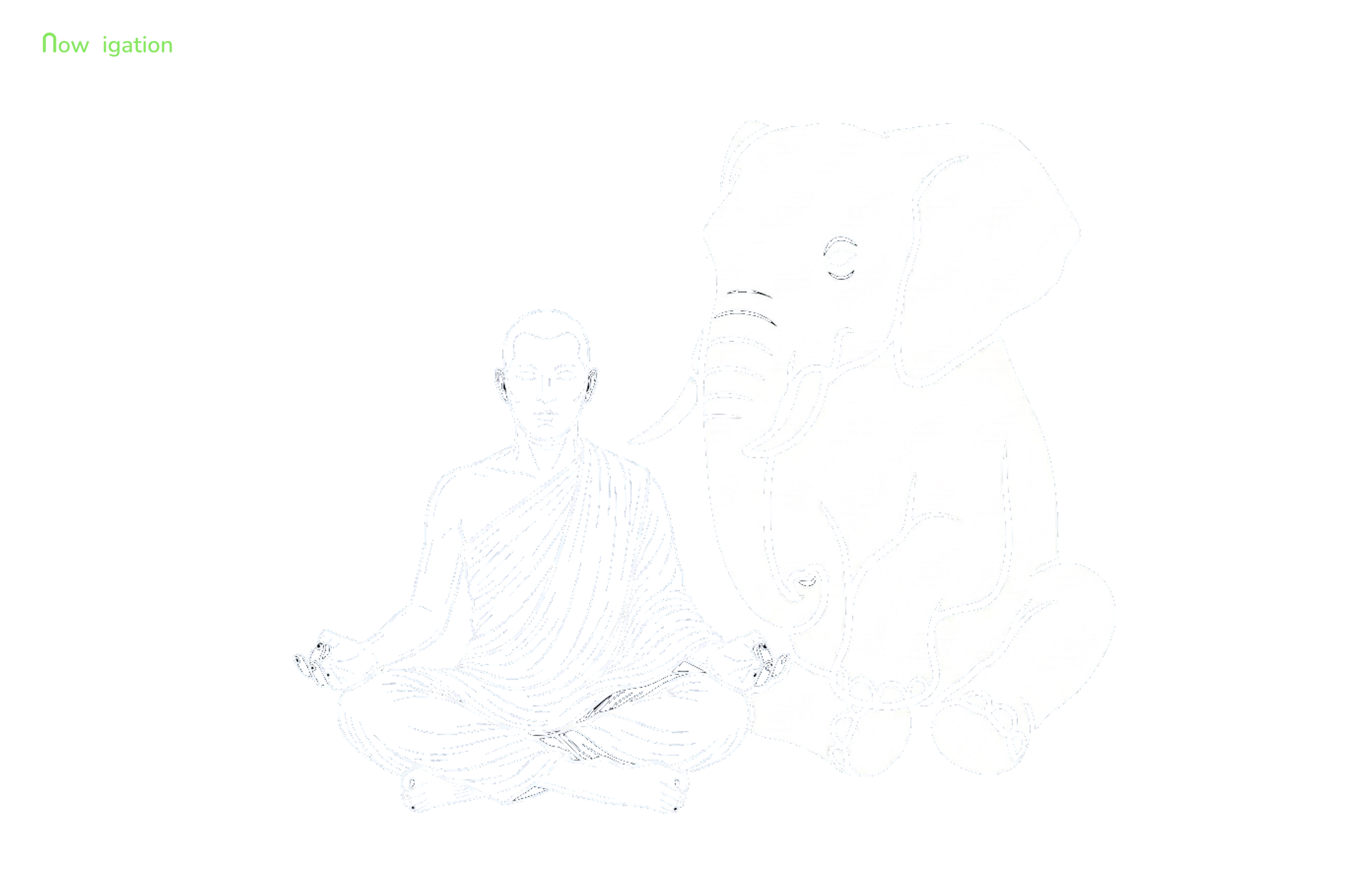
The ninth painting, the last in the series, shows the destination itself: the practitioner sits in meditation. The elephant sits beside him, calm, resting. There is no path. There are no distractions. There is no effort.
This is the ninth stage, which the tradition calls "Shamatha" (Calm Abiding, or in English: Settled Equipoise). This is "Perfect Equanimity" - what the entire journey was meant to lead to.
The Path Has Ended
Eight paintings described a journey: a winding road, the chase after the elephant, the struggle with the monkey, the trap of the rabbit, the fading fire, the tempting fruits. In the ninth painting, all of this is gone.
There is no path - there is nowhere to go. The practitioner has arrived. There is no more "later", no more "next stage". There is only here.
The tradition describes this transition in precise words: "the path has ended." Concentration has shifted from something that had to be worked at into a natural state of mind.
The Elephant at Rest
Through eight paintings the elephant walked - sometimes fleeing, sometimes being dragged, sometimes yielding, sometimes leading itself. In the ninth painting the elephant sits. It is entirely at rest. It has nowhere it needs to go.
The tradition describes this clearly: the mind can hold concentration without effort for long periods of time - days, weeks, even months. This is not a metaphorical description. At this stage, advanced practitioners can enter a meditation sitting and remain in it continuously, without fading and without any need for effort, for stretches of time that cannot even be imagined from the early stages.
The Practitioner in the Lotus Posture
Notice the practitioner's posture in the painting: he sits in the full lotus, his hands in the meditation gesture, his eyes half-closed. He is not standing, not walking, not pointing, not holding a rope. He is simply sitting.
This is the classic form of a practitioner who has arrived. There is no more "work" to do during the sitting. No more rope to pull, no hook to hold, no pointing to direct. The practice is the sitting itself.
This is the greatest difference between the ninth painting and all those that came before. Until now, we saw action. In every painting the monk did something: ran, held, led, pointed. In the ninth painting - the practitioner simply is.
Is This the End?
An honest answer: no. The ninth stage is the destination of the Shamatha journey, but not the destination of the Buddhist path as a whole.
The Tibetan tradition speaks of two further stages beyond the nine:
Stage 10: Actual Shamatha - the practitioner rides the elephant. Here arises what the tradition calls "Mental and Physical Pliancy", a profound experience of bliss that accompanies complete concentration.
Stage 11: Entering Vipassana (Insight Meditation) - the practitioner uses the concentration he has attained to investigate the nature of reality.
In other words: Shamatha is not the final destination - it is the tool. Perfect concentration makes insight possible. Without Shamatha there is no genuine Vipassana. But Shamatha alone is not liberation either.
What Have We Learned Across the Nine Stages?
The journey we have travelled together through the nine paintings teaches us things that one or two practice sessions cannot:
1. The journey is not linear. Sometimes we are behind, sometimes ahead, sometimes touching the elephant, sometimes only pointing at it. Each position serves its purpose.
2. The dangers change along the way. At the start, the danger is gross distraction. Later - subtle dullness. After that - boredom, elation, loss of interest. It is not enough to know how to catch attention; one must know which trap belongs to which stage.
3. The driving power changes. From the Power of Hearing, to Reflection, to Mindfulness, to Awareness, to Diligence, and finally to Perfection. No stage rests upon the same power as the one before it.
4. The fading fire is part of progress. Effort lessens along the journey - not because we are giving up, but because the quality of attention is becoming finer.
5. Symbols that come and go. The rabbit appears at the third stage and leaves at the sixth. The monkey leaves at the seventh. The colours change. Every detail marks a specific achievement or a specific danger.
The Nowvigation Method and the Whole Journey
The aim of Nowvigation is not to lead the practitioner to the ninth stage. Most practitioners, even the most diligent of them, will live their lives in the early and middle stages, and that is perfectly fine.
The aim of Nowvigation is something more modest: to help you pass through the early stages without falling into the classic traps. The thumb mechanism is particularly helpful at stages 1-5, where the danger of distraction and of subtle dullness is greatest. The training wheels protect both the beginner and the more advanced practitioner alike, until the practitioner himself can let them go.
The ninth painting is an important reminder of why we do this in the first place: there is an end. Sustained stillness is not a legend. It is a real state of mind, described in detail in the Buddhist traditions, and it is attainable.
Three Points to Take Home - From the Ninth Painting and From the Whole Series
1. Shamatha is the destination of the journey of concentration, but not the final destination of the path. Perfect concentration is the tool that enables genuine insight, but on its own it is not liberation.
2. Every stage in the journey serves a unique purpose. There is no "shortcut" from one stage to the next. Every sitting at the first or second stage builds the foundation for the stages that follow.
3. The end is described clearly. A practitioner sits in stillness. His mind rests at his side. There is no path. There is no struggle. There is no effort. Only quiet, awake, and complete being.
Closing the Series
Thank you for walking with us through the nine paintings. We hope the series has given you a clearer picture of the journey - not only of its destination, but of the road that leads to it. Of the traps, the achievements, the stages, and the symbols that every practitioner meets along the way.
The journey is long, but it is not impossible. Every sitting is a step.
For further reading: Geshe Rabten's book "The Mind and Its Functions" and the writings of Lati Rinpoche offer a comprehensive account of the nine stages according to the Tibetan tradition. In Lion's Roar, Jan Willis's article "10 Steps to Tame the Elephant" offers a clear and accessible look at the journey as a whole.
Want to start practicing concentration with real-time feedback and identify which stage you are in? Download Nowvigation and begin your journey.