
The Nine Stages of Concentration - The Sixth Painting: When Stillness Becomes Second Nature
Article series | Article 6 of 9 | Estimated reading time: 5 minutes
Remember the fifth painting? The practitioner walked ahead of the elephant for the first time and led it. The monkey fell back and held the elephant's tail. But the rabbit still sat on the elephant's back - a symbol of the subtle dullness that threatens every practitioner at that stage.
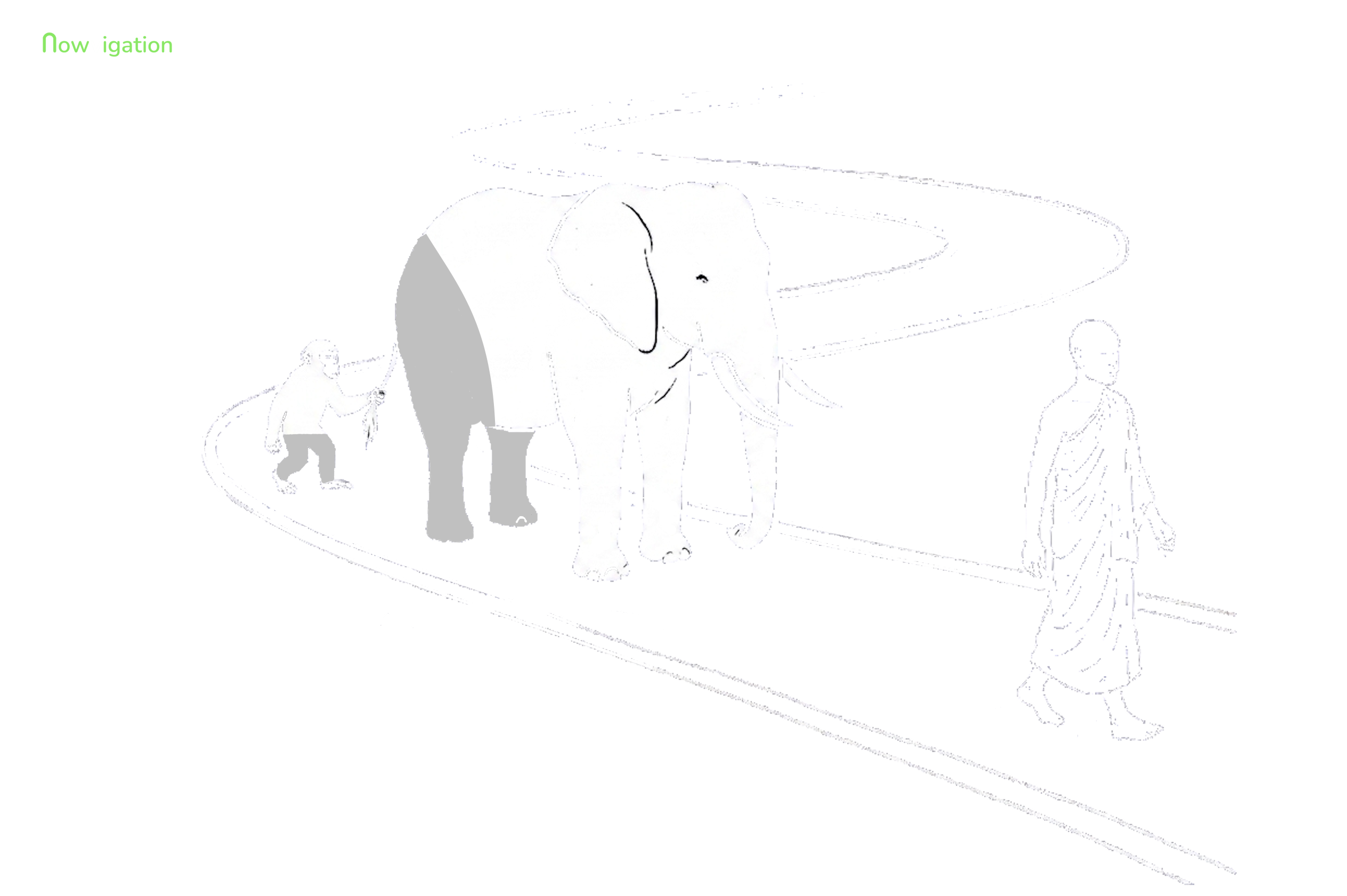
The sixth painting shows the achievement the tradition has been waiting for throughout the entire journey: the rabbit has disappeared.
This is the sixth stage, which the Tibetan tradition calls "Pacifying" (or in Tibetan English: Peaceful Setting). It marks the end of the first half of the journey, and the close of a long and deep piece of work: the danger of subtle dullness is behind us.
The Rabbit Has Gone - What Does That Mean?
For three whole paintings - three, four, five - the rabbit sat on the elephant's back. It appeared in the third painting, and remained in the fourth and fifth as a constant danger.
Now, in the sixth painting, it is gone.
What does this mean? The practitioner is no longer exposed to subtle dullness. His quiet is no longer a "blurred quiet" - it is a bright, vivid, wakeful quiet. He knows the difference between genuine calm and pleasant drowsiness, and he no longer falls into the trap.
This is the Rabbit Trap overcome - not through head-on struggle, but through the gradual ripening of inner awareness.
The Setting Has Changed
Notice what is absent from the sixth painting compared with the last:
No fire. The effort once needed to tame the elephant is over. There is no longer any need for a fading flame. Concentration has become second nature.
No fruit tree. No flowers. The five senses are no longer temptations. Not that they have vanished from the world, but they no longer interfere with practice. The practitioner sits, and is not drawn away by scent, nor sound, nor sensation.
The setting is clean. Only the essential figures remain: the monk, the elephant, the monkey, and the path. Nothing else needs to be in the picture.
This is a precise description of what happens in the mind: the practitioner has found his way to a stable inner quiet. No more outward pulls. No more inward struggles. Only attention and its object.
The White Monkey Holding the Tail
The monkey is still there, but it is now entirely white. It walks behind the elephant in submission, holding its tail - not to stop it, but as a sign of acceptance.
Tradition describes this stage as the point at which all aversion towards meditation vanishes. Until now, even at advanced stages, something in the practitioner resisted - "enough for today", "perhaps tomorrow", "this is too heavy". At the sixth stage, even that faint resistance has gone. The practitioner knows with certainty that meditation is the right thing, and he wants it.
The Monk Who Doesn't Look Back
One final, subtle detail: in the earlier paintings, the monk always looked back - at the elephant, at the monkey, at what was happening. He needed to see whether attention was in place.
In the sixth painting, the monk walks forward and does not look back. He knows the elephant is behind him, knows it is following, and does not need to verify. Confidence has become part of the practice.
Why This Matters Even for a Beginner
This article describes a very advanced stage. Most practitioners - even those with years of experience - do not reach it. So why read?
For one important reason: to know where the path leads. Our journey has a map. And even if we are still at the first or second painting, it matters to know that the road ends somewhere definite. That there is an end to subtle dullness. That there is an end to resistance towards meditation. That there is a stage at which stillness simply exists, without struggle.
This is also an important reminder: the reason we work so hard in the early stages is precisely to reach these ones. Recognising the Rabbit Trap, using the training wheels, daily practice - all of these are the foundation upon which the later stages are built.
Three Points to Take Home
1. The rabbit has gone. The danger of subtle dullness that accompanied us for three paintings is behind us. The quiet is vivid, awake, and clear.
2. The setting has changed. No more fire, no more fruit tree, no more flowers. Concentration has become second nature, and outward distractions have lost their power.
3. The resistance to meditation has vanished. The practitioner is no longer merely training. He wants to practise. This is a profound shift that changes the entire relationship with the work.
The next article in the series deals with the seventh painting - the stage at which the monkey finally disappears.
Want to start practicing concentration with real-time feedback and identify which stage you are in? Download Nowvigation and begin your journey.